


The Future of GCam in 2025: Trends, Computational Photography Advances, Device Support, and What Users Should Expect Next
As smartphone hardware continues to evolve, the role of computational photography becomes more central to the mobile imaging experience. For many users, Google Camera (GCam) remains the gold standard — not because of hardware, but because of the software algorithms behind it.
In 2025, GCam is entering a new phase driven by advancements in AI, sensor development, and the growing Android enthusiast community. This long-form report examines the current state of GCam, how it is changing, why the community remains strong, and what users can expect in the coming months and years.
This analysis is based on observed development patterns, public roadmap predictions, community behavior, device trends, and computational photography research.
1. The Role of Computational Photography in 2025
Five years ago, computational photography was an emerging field.
Today, it is the defining factor of mobile imaging.
Manufacturers now rely more on:
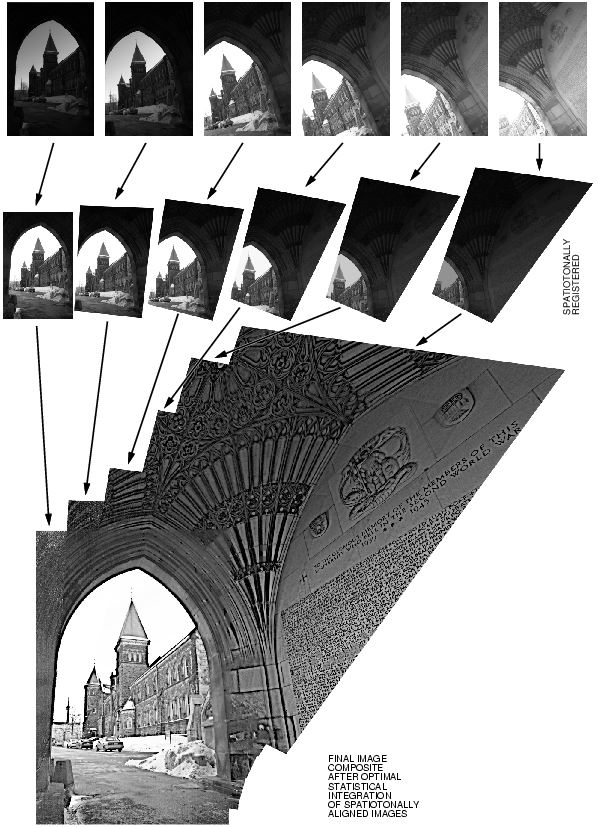
- multi-frame merging
- AI-driven denoising
- sensor fusion
- dynamic tone mapping
- exposure bracketing
- depth segmentation
- 3D face reconstruction
- context-aware white balance
- scene-adaptive HDR
GCam has led this transformation with HDR+, Night Sight, and Real Tone color science.
In 2025, computational photography is moving toward:
- multi-exposure RAW fusion
- per-pixel local tone inference
- neural-based white balance
- real-time segmentation refinement
- multi-sensor simultaneous readouts
This evolution strengthens GCam’s position as the most advanced computational imaging pipeline available on Android.
2. GCam 2025 Trend: From Multi-Frame HDR to AI-Integrated Imaging
GCam’s approach has traditionally relied on frame stacking.
However, Google is gradually shifting toward neural pipeline processing, which:
- analyzes scenes before capture
- predicts lighting changes
- adjusts noise reduction based on ambient light
- adapts sharpness to subject distance
- improves color rendering based on skin tone analysis
This shift means upcoming GCam versions will behave more like AI-driven image interpretation engines rather than traditional HDR stackers.
We are moving from:
“combine frames” → “understand the scene and generate optimal frames”
This is a fundamental transformation.
3. Device Trends: More Manufacturers Optimizing for GCam Compatibility
An interesting development in 2025 is the silent acknowledgment by manufacturers that many users prefer GCam over stock apps.
This has led some brands — especially Xiaomi, Poco, OnePlus, Motorola, and Realme — to:
- unlock more Camera2 API features
- keep RAW support open
- avoid excessive sensor cropping
- expose more camera parameters to developers
These changes indirectly improve GCam performance.
Additionally, mid-range devices now use sensors like:
- Sony IMX766
- IMX890
- Samsung GW3
- Omnivision OV64 series
These are highly compatible with the GCam pipeline and respond exceptionally well to pixel-based algorithms.
For the first time, GCam performance on mid-range sensors can match or sometimes surpass older flagship cameras.
4. The Big Shift: Community-Driven Calibration Becomes the Norm
XML configuration files used to be optional.
In 2025, they have become a standard requirement for achieving optimal quality.
Why?
Because the number of supported devices has exploded, and each sensor behaves differently.
For example:
- Two “Redmi Note” models can use different sensors
- The same sensor may perform differently under different firmware builds
- Regional variants sometimes use alternate ISPs
- Mid-range devices rely heavily on color tuning
As a result, community-driven calibration is now a crucial part of the GCam ecosystem.
GCam’s future depends heavily on:
- per-device calibrations
- per-lighting scenario adjustments
- improved auxiliary camera support
- algorithmic corrections for specific hardware behaviors
This evolution is why community forums, testing groups, and calibration teams are now more active than ever.
5. Multi-Lens Support: The Biggest Challenge Going Forward
One of the most complex tasks for GCam port developers is auxiliary camera support.
The issues include:
- inconsistent sensor IDs
- non-standard camera switches
- proprietary camera access layers
- incomplete API exposure
- manufacturer-level lockouts
- different behavior per Android version
In 2025, developers are making progress by:
- reverse-engineering auxiliary lens IDs
- building adaptive lens-switching interfaces
- integrating per-sensor exposure tables
- using fallback pipelines for unsupported modules
It is likely that upcoming GCam builds will offer more stable support for ultrawide, telephoto, macro, and depth sensors.
6. Night Sight and Low-Light Photography: The 2025 Breakthrough
Night photography has been the main reason users switch to GCam.
In 2025, Night Sight is expected to improve significantly through:
- AI-based noise pattern prediction
- low-light semantic segmentation
- high-ISO color preservation
- astrophotography frame optimization
The next generation of Night Sight aims to:
- reduce motion blur
- improve hand-held exposure stability
- enhance micro-contrast
- correct unnatural color casts
These upgrades will produce cleaner results even in complex lighting environments such as neon lights, mixed temperature bulbs, or urban night scenes.
7. Real Tone and Color Science: Accuracy Takes Priority Over Style
From 2021 onward, Google introduced Real Tone, focusing on accurate skin tone rendering.
In 2025, Real Tone is evolving even further:
- more accurate dark-skin exposure handling
- improved warm-light calibration
- context-aware white balance that adapts to skin detection
- refined separation of luminance and chroma noise
This trend marks a shift away from the stylized “vibrant” processing of many stock apps.
Users increasingly prefer accuracy and realism — and Google Camera is adapting to this demand.
8. The Future of XML Calibrations: More Automation, Less Manual Tuning
XML files will remain a core part of GCam ports, but their creation process will evolve.
Instead of manual trial-and-error tuning, the future will involve:
- automated scene analysis
- AI-generated noise models
- device-specific baseline profiles
- dynamic calibration updates
Developers are experimenting with pipelines that create XML-like profiles automatically based on:
- sensor data
- exposure curves
- AWB drift
- histogram distributions
- lens distortion maps
This automation will make calibrations more accurate and consistent.
9. The Rise of Cross-Device GCam Testing Communities
2025 has seen significant growth in users joining:
- Telegram testing groups
- Reddit calibration subcommunities
- Regional GCam groups (India, Brazil, Turkey, Indonesia)
- Device-specific photography groups
These communities produce:
- shared test galleries
- comparison charts
- XML tuning feedback
- bug reports
- lens-mapping findings
Their role in GCam development is now more important than ever.
The future of GCam is becoming increasingly collaborative.
10. Predictions: What GCam Users Should Expect in the Next 12 Months
Based on current development patterns, here is what GCam users can realistically expect in 2025–2026:
1. More AI-Driven Processing
Less traditional HDR stacking, more context-aware image interpretation.
2. Stronger Support for Multi-Lens Setups
Better ultrawide and telephoto performance through adaptive lens frameworks.
3. Faster Night Sight
Shorter exposure times with improved stabilization.
4. More Accurate Real Tone Rendering
Continued focus on skin tone precision across all lighting.
5. Automated XML Calibration
Device tuning becoming partly automated.
6. Wider Mid-Range Optimization
Mid-range phones outperforming older flagship models.
7. More Stable Ports Across All Brands
More consistent performance across Snapdragon, Exynos, and MediaTek.
Conclusion
GCam remains the most influential imaging software in the Android ecosystem, and its evolution in 2025 marks a shift toward smarter, AI-driven computational photography. With advancements in neural processing, device calibration, multi-lens pipelines, and color science, the future of GCam is brighter than ever.
As smartphones continue to rely less on hardware and more on algorithmic interpretation, Google Camera will remain a key benchmark in the industry — and community-driven development will continue to push image quality forward.
GCamLab will follow these changes closely, offering users research-backed explanations, device guides, calibration insights, and educational resources for every stage of GCam’s evolution.