
The future of mobile photography is no longer defined by hardware alone. As we enter 2026, computational photography has become the central force behind every major imaging breakthrough — and among all software-based approaches, Google Camera (GCam) remains the reference point. What began as a simple HDR+ experiment is now the backbone of Android’s advanced imaging ecosystem. With rapid AI integration, evolving sensors, and a highly active global community, GCam is entering a transformative era that will redefine the next generation of smartphone photography.
This long-form analysis explores where GCam is heading, how its architecture is shifting, how community-driven calibration is shaping the experience, and what users can realistically expect in 2026 and beyond. Insights are based on developer activity, public changelogs, device trends, and computational photography research.
1. AI-Driven Computational Photography Becomes the Standard
Five years ago, computational photography supplemented hardware.
Today, it defines it.
Manufacturers increasingly prioritize:
- multi-frame AI fusion
- neural-based white balance
- dynamic tone inference
- semantic segmentation
- ambient-aware exposure curves
- noise prediction models
- spatial–temporal denoising
- per-pixel HDR mapping
GCam spearheaded this shift with HDR+, Night Sight, Super Res Zoom, and Real Tone.
But 2026 marks a new stage: the transition from “multi-frame stacking” → “neural scene interpretation.”
GCam’s upcoming pipelines can:
- analyze lighting before capture
- infer motion vectors in real time
- predict noise patterns based on sensor behavior
- correct color shifts using AI-trained datasets
- adapt sharpness to subject depth and texture
This represents a dramatic evolution in how images are created — focusing not on combining frames but on understanding them.
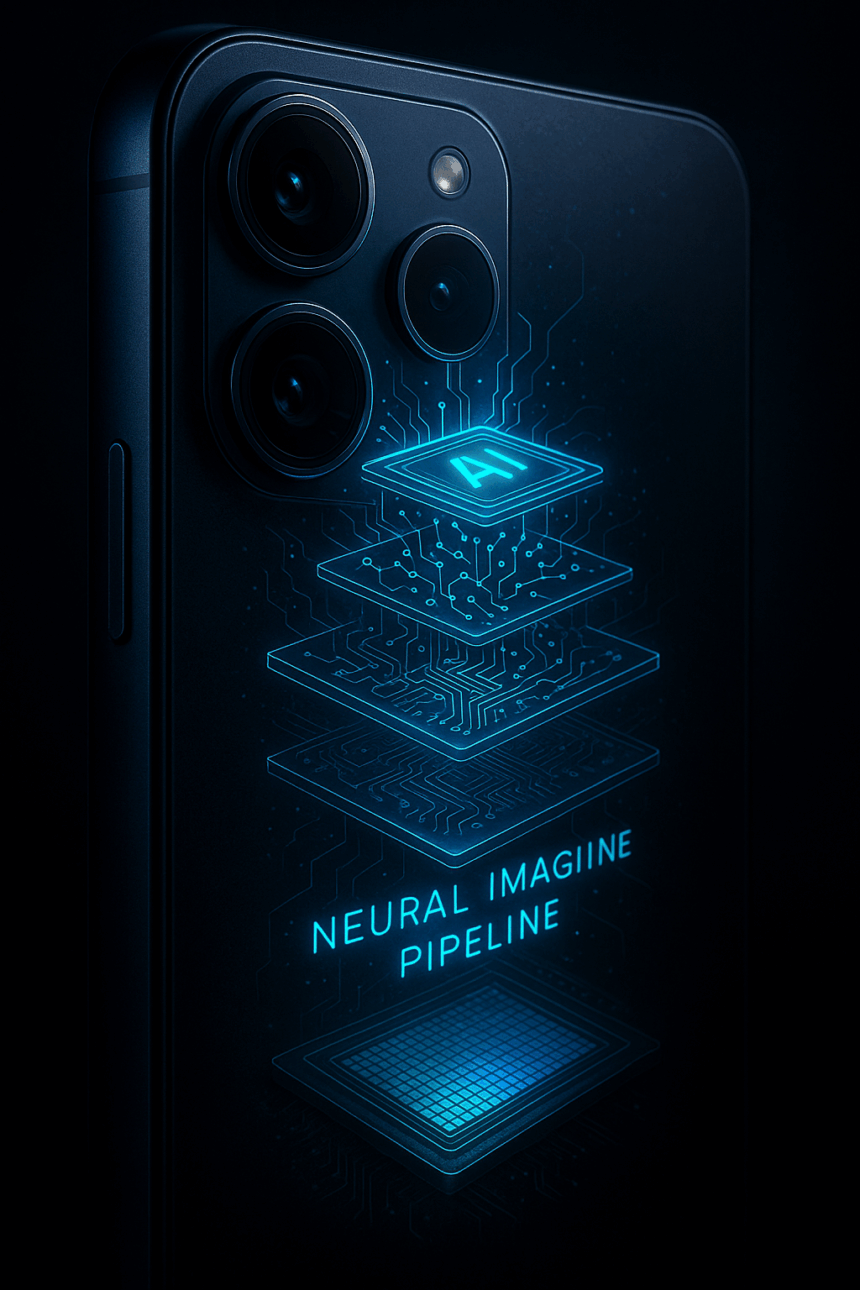
2. The Rise of Neural Image Pipelines
Google has been testing neural imaging pipelines internally since late 2023.
In 2025, signs of this appeared in limited Real Tone refinements and new AWB models.
In 2026, neural pipelines are expected to be widely deployed across GCam ports.
Key improvements include:
- enhanced local tone mapping
- AI-driven chroma noise suppression
- dynamic highlight reconstruction
- better low-light ISO logic
- facial structure–aware exposure adjustments
Rather than using fixed values, pipelines adapt live based on scene semantics — marking the biggest shift since HDR+ Enhanced.
3. Device Trends: Manufacturers Quietly Embrace GCam Compatibility
A fascinating change is happening behind the scenes:
manufacturers are no longer fighting the GCam community — they are supporting it.
Brands like Xiaomi, POCO, OnePlus, Motorola, Realme, and Tecno are increasingly:
- enabling full Camera2 API by default
- providing RAW10/RAW12 support
- avoiding aggressive sensor cropping
- exposing more lens and ISP data
- reducing processing restrictions
The reason is simple: users prefer GCam for photography, and brands want better user satisfaction scores.
Even mid-range phones equipped with sensors like:
- Sony IMX766
- IMX890
- Samsung ISOCELL GW3
- Omnivision OV64B
are now achieving results that challenge
2026 may become the first year where mid-range + GCam > two-year-old flagships becomes an industry norm
4. Communit
XML configuration files used to be optional tweaks.
In 2026, theessential.
Why?
Because:
- device diversity has exploded
- sensors v
- firmware affects color science
- ISP behavi
- reg
Community groups — f
- per-device XM
- lighting-specific tuning profiles
- ultra-wide
- lib patcher
- AI-assisted noise models
- exposure cu
The community is essentially acting as a distr
This collaborative ecosyst
5. Auxiliary Camera Support: The Remaining Major Challenge
Multi-lens support remains the most complicated part of GCam development.
Issues include:
- inconsistent auxiliary IDs
- proprietary lens-switching
- locked APIs
- vendor-specific camera stacks
- different behavior across Android 13–15
- inconsistent metadata reporting
However, developers are making progress:
- reverse-engineered lens ID tables
- adaptive fallback pipelines
- per-sensor exposure tables
- dynamic AWB models for ultra-wide sensors
- refined EXIF reconstruction
2026 may bring the most stable ultra-wide and telephoto support in GCam history — especially for Snapdragon-based devices.
6. Night Sight 2026: A New Level of Low-Light Performance
Night Sight remains GCam’s flagship feature.
In 2026, improvements are expected in:
- motion-stabilized long exposures
- semantic shadow interpretation
- AI noise pattern prediction
- hand-held astrophotography support
- micro-contrast reconstruction
- neon light color correction
This will directly improve:
- handheld low-light shots
- indoor portraits
- night cityscapes
- astrophotography clarity
Thanks to AI, low-light performance may surpass what is physically possible with small smartphone sensors.
7. Real Tone Evolution: Accuracy Becomes the Priority
Real Tone is no longer a feature — it’s an imaging philosophy.
In 2026, Real Tone improvements will include:
- deeper contrast optimization
- adaptive skin luminance mapping
- warm-light compensation
- chroma noise separation for skin tones
- improved highlight recovery for darker tones
This aligns with the global trend toward natural, non-stylized color reproduction, pushing GCam ahead of heavily saturated stock camera apps.
8. Automated XML Calibration Will Replace Manual Tuning
Traditionally, XML configs were handcrafted through trial and error.
But developers are experimenting with:
- automated tuning models
- scene-learning pipelines
- device baseline profiles
- histogram-based dynamic correction
- lens distortion map integration
This is the early stage of a future where XML files are generated semi-automatically based on actual sensor behavior.
The next wave of configs will be:
- more consistent
- less error-prone
- easier for beginners
- more adaptive across lighting conditions
9. The Growth of Global Testing Communities
Across 2024–2026, GCam groups have exploded across:
- India
- Brazil
- Turkey
- Indonesia
- Philippines
- Eastern Europe
These communities offer:
- device tests
- XML feedback
- bug reporting
- comparison galleries
- changelog summaries
- recommended settings
Their involvement accelerates development and makes GCam tuning more accessible than ever.
10. What Users Can Expect in the Next 12–18 Months
Based on current developer activity, 2026 likely brings:
- More AI-driven exposure pipelines
- Better auxiliary lens stability
- Faster and cleaner Night Sight captures
- More accurate Real Tone rendering
- Semi-automatic XML calibrations
- Improved mid-range sensor performance
- More unified GCam versions across devices
GCam’s future remains deeply tied to computational photography — and computational photography is advancing faster than smartphone hardware.
Conclusion
GCam’s evolution into 2026 represents a pivotal moment for mobile imaging.
As neural pipelines replace traditional HDR stacking, as sensors grow more AI-friendly, and as global communities refine calibrations, GCam becomes more than a camera app — it becomes an ecosystem.
With these changes, Google Camera will continue to set the benchmark for computational photography, and platforms like your site will play a vital role in helping users understand and benefit from these advances.
GCamLab will track these developments closely, offering deep-dive analysis, calibration insights, device recommendations, and research-backed content for GCam users worldwide.